
A new windshield used to be the end of the job. On many newer vehicles, it is now only half of it.
If your car has a driver assistance camera mounted behind the glass, replacing the windshield can change where that camera is pointed. This guide explains when windshield calibration is required after replacement, what happens if it is skipped, how the process works and what to ask before you book.
Is Calibration Required After Windshield Replacement?
If your vehicle has a driver assistance camera mounted behind the windshield, the answer is usually yes. Almost all vehicle manufacturers require the front camera to be calibrated after a windshield replacement. If the camera is off by even a few millimetres, safety features such as lane keep assist and automatic emergency braking may not work as intended.
What Is Windshield Calibration?
Windshield calibration does not adjust the glass itself. It realigns the camera mounted behind your windshield so it sees the road exactly the way your vehicle manufacturer intended.
That camera is part of your vehicle’s Advanced Driver Assistance Systems (ADAS). It reads lane markings, measures distance to vehicles ahead and helps trigger warnings or braking. Calibration resets its aim to factory specifications after the glass around it has been changed.
Why Does a New Windshield Affect the Camera?
The camera is moved during a windshield replacement, so it has to be recalibrated. Even when the new glass is installed correctly, the camera’s viewing angle can change slightly. To a camera that judges distance and lane position, a small shift can make a real difference.
Which Features Depend on the Windshield Camera?
Depending on your vehicle, the windshield camera may support:
- Forward collision warning
- Adaptive cruise control
- Lane departure warning and lane keep assist
- Automatic emergency braking
- Traffic sign recognition
Is Windshield Calibration Required by Law in Ontario?
The requirement comes from your vehicle manufacturer. Automakers set calibration steps in their repair procedures and reputable glass shops follow them.
In one Canadian case reported by CBC News, Transport Canada pointed out that the owner’s manual explained that windshield replacement can make the system operate abnormally and that camera recalibration is required. If you are unsure what your vehicle needs, your owner’s manual and your glass technician are the places to check.
What Can Happen If Calibration Is Skipped?
A camera that is aimed incorrectly can give your safety systems the wrong information. CBC News reported the case of an Acura MDX owner whose car began steering him toward oncoming traffic after a windshield replacement without recalibration.
That is an extreme example, but it shows why the step matters. Features you rely on to keep you in your lane or brake in time all depend on the camera seeing the road accurately.
No Warning Light does Not Mean the Camera is Aligned
Many drivers assume that if no warning light appears, everything is fine. That is not a safe test. A misaligned camera does not trigger a fault code, so your dashboard can stay clear even when the camera is pointed in the wrong direction. Calibration is confirmed with equipment, not by watching the dash.
Does Every Vehicle Need Calibration?
No. Calibration depends on whether your vehicle has a camera or sensor mounted on the windshield and what your manufacturer specifies for it. An older vehicle without a windshield-mounted camera does not need it.
That is why Auto Glass Tec starts every ADAS job with a full diagnostic pre-scan. It identifies active fault codes and confirms which safety features your vehicle has before any work begins.
Static vs Dynamic Calibration: What Is the Difference?
Your vehicle manufacturer decides which method your camera needs.
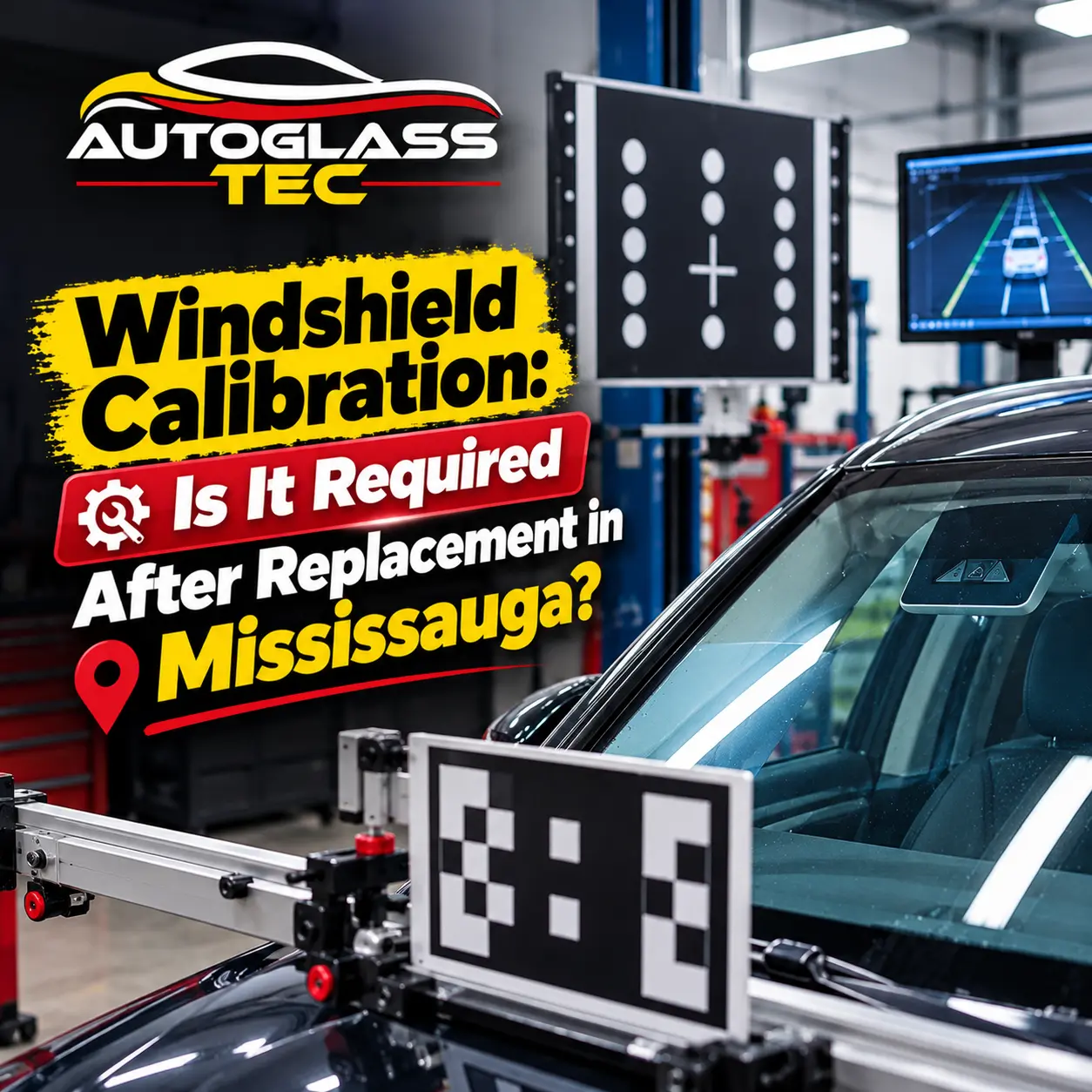
- Static calibration: Done in the shop using specialized target boards, laser measuring tools and precise distance markers while the vehicle is stationary.
- Dynamic calibration: Done while driving the vehicle at controlled speeds on prescribed road conditions, so the system can align itself using real lane markings.
- Dual calibration: Some luxury and newer models need both, an in-shop calibration followed by an on-road calibration.
How Auto Glass Tec Handles Calibration in Mississauga
At Auto Glass Tec Mississauga, windshield replacement and ADAS calibration are handled under one roof. Our process follows four steps:
- Comprehensive pre-scan: A full diagnostic scan to check fault codes and confirm your vehicle’s safety features.
- Precision windshield installation: Your new glass is installed using high-grade materials that match factory standards.
- Target or dynamic calibration: We align your camera using calibration targets and computer diagnostic tools, through static shop calibration or a dynamic road-test calibration.
- Final post-scan and verification: A second full system scan confirms all safety warnings are cleared.
You can choose OEM or OEE certified glass and every auto glass replacement is backed by our lifetime warranty. Learn more about our windshield replacement in Mississauga and our warranty.
Does Insurance Cover Windshield Calibration in Ontario?
Often, but not always. Many policies treat calibration as a necessary part of a covered windshield replacement claim, while others may not pay for it. The details depend on your policy, so check with your insurer before booking.
Auto Glass Tec works with insurance providers in Ontario to handle the claims process and offers deductible coverage of up to 100%. See how our auto glass insurance support works or read how we help cover your deductible.
What to Ask Before Your Windshield Replacement
Before you book, ask your glass shop:
- Does my vehicle have a windshield-mounted camera that needs calibration?
- Will calibration be done during the same appointment?
- Which method does my vehicle need: static, dynamic or both?
- Do you scan the vehicle before and after work?
- Will my invoice show that calibration was completed?
If you are still deciding whether your windshield needs replacing at all, our guide on windshield repair or replacement can help. After the job, follow our windshield replacement aftercare tips.
Frequently Asked Questions
Do I need calibration after a windshield chip repair?
Usually not, but it depends on where the chip is. Honda has noted that even minor repairs within the camera’s field of vision may cause the system to operate abnormally. If a chip sits near the camera area, ask your technician before the repair. Learn more about windshield repair in Mississauga.
Can I drive my car if calibration has not been done yet?
The car will drive, but your driver assistance features may not work as intended. Avoid relying on lane keep assist, adaptive cruise control or automatic emergency braking until the camera has been calibrated.
Does a dealership have to do the calibration?
No. A dealership is not the only option. A glass shop with the right equipment can calibrate the camera immediately after your windshield replacement.
Can calibration be done with mobile windshield replacement?
Static calibration is done in our shop with target boards and precise measurements. If you are booking mobile windshield service, ask us which calibration method your vehicle needs so we can plan the visit correctly.
When else might my camera need calibration?
Windshield replacement is the most common reason. Some manufacturers also call for camera calibration after events such as a collision or a wheel alignment. Check your owner’s manual or ask a technician.
Book Windshield Replacement and Calibration in Mississauga
Do not leave your safety systems guessing. Auto Glass Tec provides windshield replacement and ADAS calibration under one roof in Mississauga.
Get a quote for your windshield replacement and calibration today.
Related Reading
- A Complete Guide to Windshield Replacement in Mississauga
- Windshield Repair or Replacement: How to Choose
- Dos and Don’ts of Windshield Replacement Aftercare
Sources
Last verified: October 27, 2026