
New windshield and now you’re being told the camera needs calibrating? Here’s what static and dynamic calibration mean and which one your car actually needs.
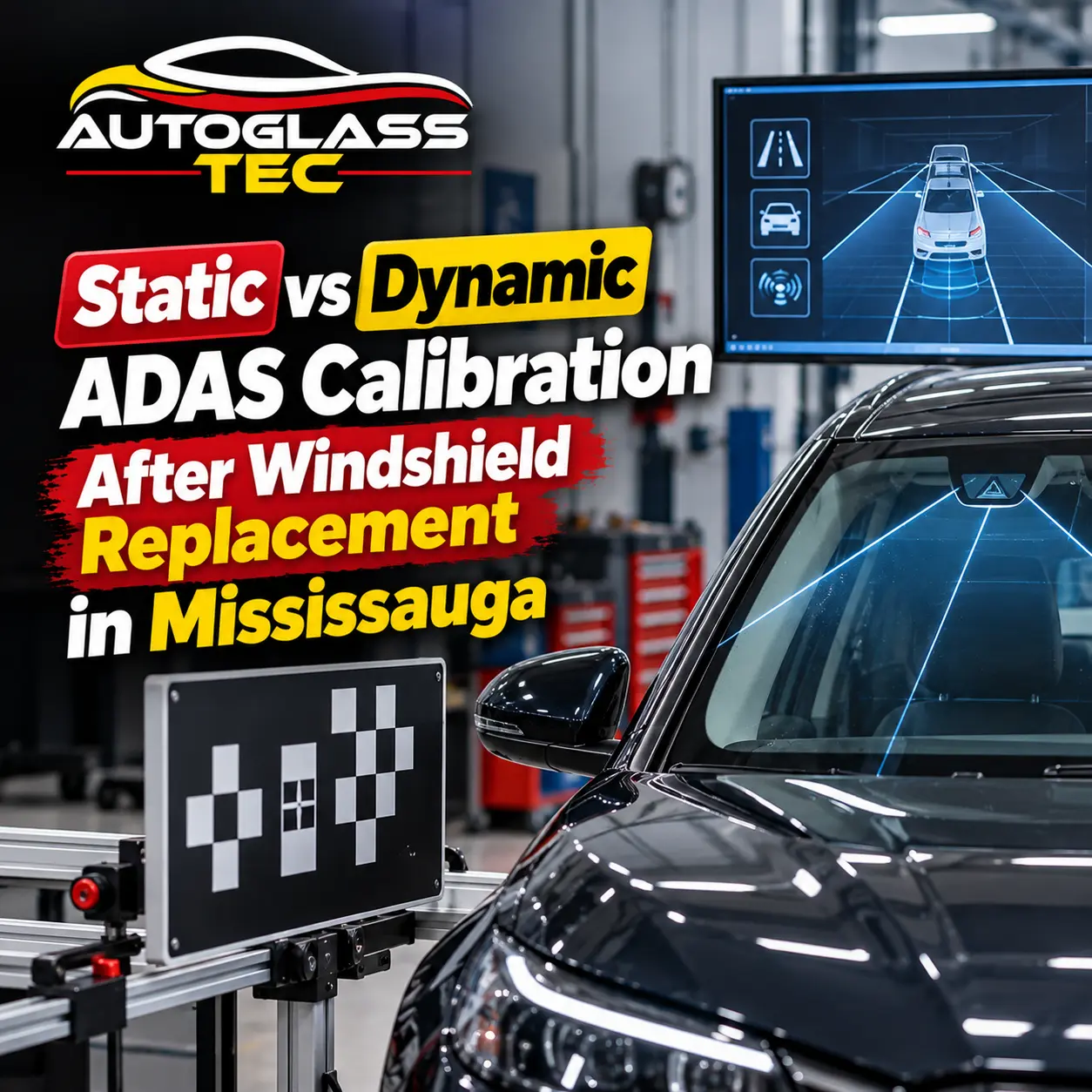
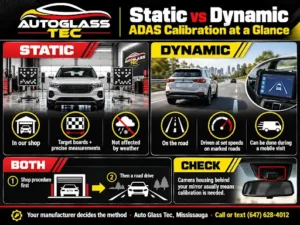
The difference in static vs dynamic ADAS calibration comes down to where it happens. Static calibration is done with the car parked in a shop in front of target boards. Dynamic calibration is done by driving the car on roads with clear lane markings. Your vehicle’s manufacturer decides which method applies. Some cars need both. Neither method is better than the other. The right one is the one your manufacturer’s repair procedure calls for.
What Is the Difference Between Static and Dynamic ADAS Calibration?
Quick Answer: Static calibration aligns your windshield camera with the car parked in a shop, using target boards at exact distances. Dynamic calibration aligns it while the car is driven at set speeds on roads with clear lane markings. The manufacturer decides the method. Some vehicles need both.
ADAS calibration is the process of realigning the camera mounted behind your windshield so driver assistance features read the road correctly. ADAS stands for Advanced Driver Assistance Systems. These include lane keeping assist, automatic emergency braking and adaptive cruise control. For Mississauga drivers who rely on these features in 401 and 403 traffic, calibration after a windshield replacement helps them work as the manufacturer intended.
Why Does a Windshield Replacement Affect ADAS?
On most equipped vehicles, the forward facing camera sits on a bracket attached to the windshield, near the rear view mirror. When the glass is replaced, the camera’s angle can shift slightly. The new glass also acts as a new lens in front of the camera. Even a small change affects how the camera judges lane lines and the distance to the car ahead.
Many vehicle manufacturers publish repair procedures that call for calibration after a windshield replacement. The exact requirement depends on the make, model and camera system.
Does My Car Need ADAS Calibration?
Look at the inside of your windshield near the rear view mirror. A plastic housing or camera lens mounted to the glass usually means calibration is needed after replacement. You can also check your owner’s manual for lane departure, forward collision or adaptive cruise features.
Calibration applies whether your new glass is OEM or aftermarket. OEM (Original Equipment Manufacturer) means the glass was made by or for the original vehicle manufacturer.
Static vs Dynamic ADAS Calibration: How Do They Compare?
Here’s how dynamic calibration vs static calibration looks side by side:
| Static calibration | Dynamic calibration | |
| Where it happens | Inside a shop on a level floor | On public roads |
| What’s used | Target boards, measuring tools and a scan tool | A scan tool plus driving at set speeds |
| Conditions needed | Level floor, open space, steady lighting | Clear lane markings, decent weather, steady traffic flow |
| Weather impact | Low, since it’s done indoors | Rain, snow or faded lines can cause delays |
| How completion is confirmed | Scan tool report | Scan tool report, not time spent driving |
| At Auto Glass Tec | In our Mississauga shop | Can be done during a mobile visit |
What Happens During Static ADAS Calibration?
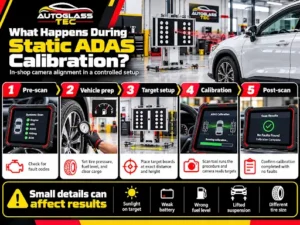
Static ADAS calibration needs a controlled space, which is why it’s done in the shop. A typical process looks like this:
- Pre-scan. A scan tool checks the system for fault codes before work starts.
- Vehicle prep. The car is set up to the manufacturer’s specifications. This can include checking tire pressure and fuel level and clearing the cargo area.
- Target setup. Target boards are placed at exact distances and heights, measured from the centre of the vehicle.
- Calibration. The scan tool starts the procedure and the camera reads the targets to set its alignment.
- Post-scan. A final scan confirms the calibration finished and no faults remain.
Small details affect the result. Bright sunlight on the target, a weak battery, the wrong fuel level or a lifted suspension can all throw off the setup. A change in tire size can affect it too.
What Happens During Dynamic ADAS Calibration?
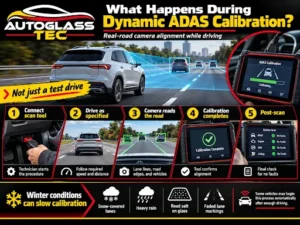
During dynamic ADAS calibration, the camera learns its alignment from the real road. This isn’t an ordinary test drive. The technician connects a scan tool and drives the car at the speed and for the distance the manufacturer specifies. The camera reads lane lines, road edges and other vehicles until the scan tool confirms calibration is complete. Time spent driving alone doesn’t prove it. A post-scan follows. Some vehicles start this process on their own after a set amount of driving.
Late fall and winter in Mississauga can slow this down. Snow cover, heavy rain, a film of road salt on the glass and faded lane paint all make the road harder for the camera to read. If conditions aren’t suitable, the technician may need to finish the drive later.
Which Calibration Does My Car Need?
The choice between static calibration vs dynamic calibration isn’t up to you or the shop. It comes from the manufacturer’s service information for your make, model, year, trim and camera system. Two cars of the same model can need different procedures if their safety packages differ. Your car will fall into one of three groups:
- Static only: done in the shop with targets
- Dynamic only: done on the road
- Both: a static procedure followed by a road drive, sometimes called dual calibration
When you ask for an estimate, have your make, model and year ready. Your VIN helps even more. The VIN is the 17 character vehicle identification number on your ownership papers. A photo of the camera area behind your mirror also helps us identify your glass and camera setup before you book.
What Are the Signs My ADAS Needs Calibration?
A miscalibrated camera doesn’t always trigger a warning light. The features can stay switched on while the camera reads the road slightly wrong. That’s why calibration should follow the manufacturer’s procedure after every replacement, not only when a warning appears. You may still notice these signs:
- A dashboard warning about the camera, lane assist or collision system
- Lane keeping assist reacting too early, too late or not at all
- Collision alerts going off with nothing ahead
- Sudden braking or steering input with no clear reason
- Adaptive cruise control misjudging the gap to the car in front
- Automatic high beams switching at odd times
If you notice any of these, don’t rely on the features. Book a check as soon as you can.
What Should You Ask Your Glass Shop About Calibration?
A few questions before booking tell you a lot about how calibration will be handled:
- Which method does my VIN require: static, dynamic or both?
- Is calibration done in house or sent to another shop?
- Will I get a copy of the pre-scan and post-scan reports?
- What happens if weather stops a dynamic calibration?
- Is calibration included in my estimate?
The equipment matters too. The Auto Glass Safety Council’s voluntary replacement standard, ANSI/AGSC/AGRSS 005-2022, calls for equipment designed specifically for calibration whenever the vehicle manufacturer requires calibration.
At Auto Glass Tec, both static and dynamic calibration are done in house in Mississauga, so your vehicle stays with one team from installation to calibration. Ask us any of these questions when you book and we’ll walk you through what your vehicle needs.
Does Insurance Cover ADAS Calibration?
When calibration is part of a covered windshield claim, it may be included. Coverage depends on your individual policy. We help with your insurance claim and can explain what your insurer needs from us.
What Affects the Cost of Static vs Dynamic Calibration?
Cost depends on a few price factors:
- Which method your vehicle requires or whether it needs both
- Your vehicle’s make, model and camera system
- Whether calibration is done with a windshield replacement or on its own
- Whether the pre-scan finds faults that need attention first
We offer free estimates, so you’ll know your options before any work begins.
ADAS Calibration FAQs for Mississauga Drivers
Q: Is dynamic vs static calibration more accurate?
Neither is more accurate when done to the manufacturer’s procedure. The right method is the one your vehicle’s manufacturer specifies. Some cars need both.
Q: Can I drive right after a windshield replacement before calibration?
Follow the safe drive away time your technician gives you for the adhesive. Until calibration is complete, your driver assistance features may not work correctly, so don’t rely on them.
Q: Can dynamic ADAS calibration be done at my home or work in Mississauga?
Yes. Dynamic calibration can be done as part of our mobile service, as long as road and weather conditions are suitable. Static calibration needs a visit to our shop.
Q: How long does ADAS calibration take?
It depends on your vehicle and the method required. Dynamic calibration also depends on traffic, road markings and weather. We’ll give you a time estimate when you book.
Q: What if my car needs both static and dynamic calibration?
We complete the static procedure in our shop first, then finish with a road drive. Both steps are scheduled together, so you only book once.
Book Your ADAS Calibration in Mississauga
Your lane assist and collision alerts are only as good as the camera behind your windshield. Auto Glass Tec handles both static and dynamic calibration in house, with a 5.0 star Google rating from 591 reviews. Every replacement comes with a lifetime warranty on auto glass replacement. Visit our Windshield ADAS Calibration Services in Mississauga page to learn more or book. Need dynamic calibration at home or work? Ask about our mobile windshield service. Contact us for a free estimate. Call or text (905) 828-2222.